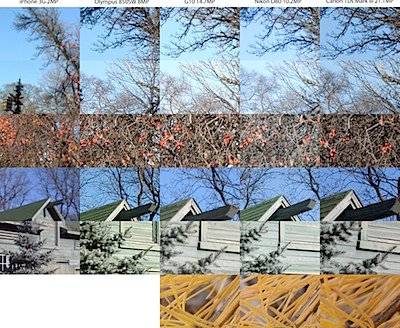
I did a very informal, technically incorrect shootout between the 5 cameras owned between myself and my wife and daughter. I tried to keep the basic stuff consistent - such as aperture and framing and distance to subject. But due to the nature of the cameras used it was not always possible. Also note that I left most processing on the default values everywhere. I did no special processing on any file.
The comparison is between my iPhone 3G 2MP camera phone, Olympus 850SW P&S, Canon PowerShot G10 14.7MP, Nikon D80 10.2MP DSLR and the Canon 1Ds Mark III 21.1MP DSLR. ISO was at base ISO for most shots - except for the Canon and Nikon which were at ISO200. Aperture was set to the lenses' optimum values. No tripods were used - all shots were handheld. This was done to show how each camera performed under typical scenarios where you might not have time to set up on a tripod.
My Canon PowerShot G10 just arrived two days ago from my favourite retailer, B&H. So I took it out a couple of times and have some photos I'll upload soon. Here is one teaser so long... Straight from the camera - JPEG, no post processing.


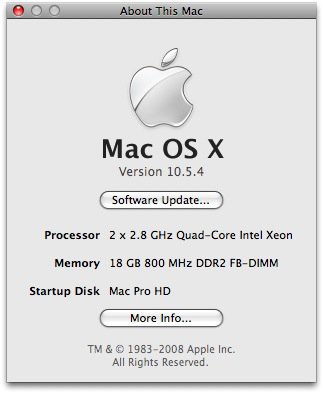
Add to this 3.75TiB of redundant (RAID1 and RAID5) local storage space...
I knew about MathML for some time now, but I never thought it was this bad. See, MathML is an XML based markup language used to describe in a standards compliant manner mathematical notations. In principle this is a cool thing, until I saw a real world example from Wolfram Research:
<math xmlns='http://www.w3.org/1998/Math/MathML' mathematica:form='TraditionalForm' xmlns:mathematica='http://www.wolfram.com/XML/'> <semantics> <mrow> <mrow> <msqrt> <mi> z </mi> </msqrt> <mo> ⩵ </mo> <mrow> <munderover> <mo> ∑ </mo> <mrow> <mi> k </mi> <mo> = </mo> <mn> 0 </mn> </mrow> <mi> ∞ </mi> </munderover> <mrow> <semantics> <msub> <mrow> <mo> ( </mo> <mrow> <mo> - </mo> <mfrac> <mn> 1 </mn> <mn> 2 </mn> </mfrac> </mrow> <mo> ) </mo> </mrow> <mi> k </mi> </msub> <annotation encoding='Mathematica'> TagBox[SubscriptBox[RowBox[List["(", RowBox[List["-", FractionBox["1", "2"]]], ")"]], "k"], Pochhammer] </annotation> </semantics> <mo> ⁢ </mo> <mfrac> <msup> <mrow> <mo> ( </mo> <mrow> <mn> 1 </mn> <mo> - </mo> <mi> z </mi> </mrow> <mo> ) </mo> </mrow> <mi> k </mi> </msup> <mrow> <mi> k </mi> <mo> ! </mo> </mrow> </mfrac> </mrow> </mrow> </mrow> <mo> /; </mo> <mrow> <mrow> <semantics> <mo> ❘ </mo> <annotation encoding='Mathematica'> "[LeftBracketingBar]" </annotation> </semantics> <mrow> <mi> z </mi> <mo> - </mo> <mn> 1 </mn> </mrow> <semantics> <mo> ❘ </mo> <annotation encoding='Mathematica'> "[RightBracketingBar]" </annotation> </semantics> </mrow> <mo> < </mo> <mn> 1 </mn> </mrow> </mrow> <annotation-xml encoding='MathML-Content'> <apply> <ci> Condition </ci> <apply> <eq /> <apply> <power /> <ci> z </ci> <cn type='rational'> 1 <sep /> 2 </cn> </apply> <apply> <sum /> <bvar> <ci> k </ci> </bvar> <lowlimit> <cn type='integer'> 0 </cn> </lowlimit> <uplimit> <infinity /> </uplimit> <apply> <times /> <apply> <ci> Pochhammer </ci> <apply> <times /> <cn type='integer'> -1 </cn> <cn type='rational'> 1 <sep /> 2 </cn> </apply> <ci> k </ci> </apply> <apply> <times /> <apply> <power /> <apply> <plus /> <cn type='integer'> 1 </cn> <apply> <times /> <cn type='integer'> -1 </cn> <ci> z </ci> </apply> </apply> <ci> k </ci> </apply> <apply> <power /> <apply> <factorial /> <ci> k </ci> </apply> <cn type='integer'> -1 </cn> </apply> </apply> </apply> </apply> </apply> <apply> <lt /> <apply> <abs /> <apply> <plus /> <ci> z </ci> <cn type='integer'> -1 </cn> </apply> </apply> <cn type='integer'> 1 </cn> </apply> </apply> </annotation-xml> </semantics> </math>
It is awfully complex and verbose! This just reiterates what I held to be true for a long time now - XML is being abused. It is great for moving hierarchical data between disparate systems - even non-hierarchical data if you focus on the interoperability and compatibility it facilitates, however using it as RDBMS storage solutions or this kind of hyper verbose markup is down right a waste of space and time. When will people learn that efficiency is important?